Showing posts with label social. Show all posts

Sunday, May 25, 2014

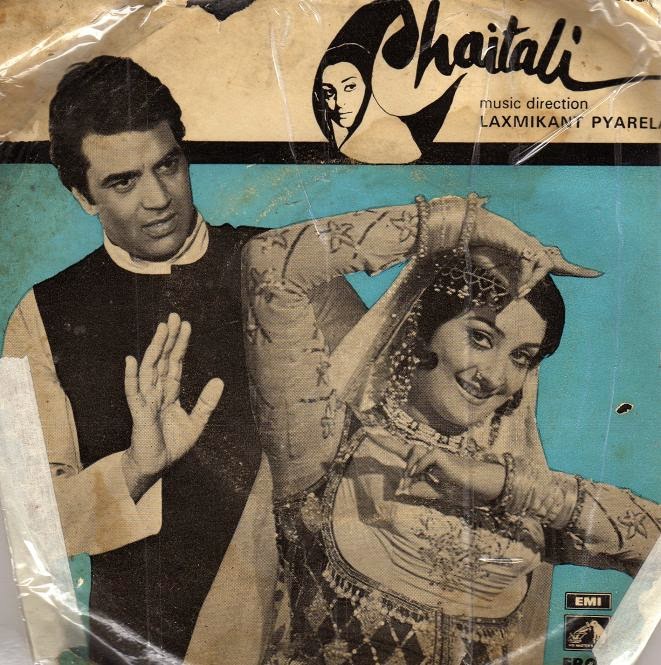
Chaitali (1975)


This is a mid 1970s movie starring Dharmendra and Saira banu in lead roles, and directed by none other than Hrishikesh Mukherjee, a man who helmed arguably some of the best Hindi movies made ever. There is another great matter of prestige attached to this feature, that of it being a Bimal Roy production, albeit posthumous. Bimal Roy, who himself arguably made some of the best Hindi movies ever, is also seen by many as the precursor to Hrishikesh Mukherjee, who he mentored along with a man called  Sampoorn Singh Kalra, better known as Gulzar. So it will be fair to say that ‘Chaitali’, as a movie, boasts of some enviable pedigree. And yet, it is one of those criminally under-seen movies, reflected in just a handful of ratings it has garnered on Imdb (less than 20 on last count). It might have been a commercial failure at that time, but does it deserve the obscurity that it is shrouded in today? For sure not, as, though the film is not faultless, it is still a reasonably engaging dramatic feature that makes a social comment on delinquency, forgiveness, and redemption. 

Adapted from a Bengali short story of the same name, Chaitali inhabits a world that is much different from the general Hrishikesh Mukherjee fold, wherein most of his movies stayed away from depicting the darker strata of our social order. The narrative is centered on Chaitali (Saira Banu in the title role), a woman who has been forced by her circumstances and her unfortunate upbringing to occupy a space that constantly haunts her, but from which she not being able to escape. Creating a stark contrast, her life merges with a more typical Hrishikesh Mukherjee middle-class urban household, full of family values and righteousness. The first few minutes of the movie establish this moral rectitude and bonhomie of this family, headed by a kind matriarch, and assisted by that ever cheerful and passionately loyal servant (Asit Sen yet again). The tone and tenor of the film then changes considerably when Chaitali enters the household, guiltily taking advantage of goodness of the elderly matron, with the intention of swindling some money. All this while, the younger son of the family Manish, (Dharmendra in a mostly subdued role) is aware of the reality of the woman, but takes pity on her circumstances, apart from developing a soft corner for her. The drama later shifts to a religious sanctuary on the hills, where Chaitali shares her life story honestly with Manish, who gets utterly shaken by the grimy details of her upbringing, which include a criminally inclined father on the run, a brothel, many lecherous eyes eager to pounce on her adolescence, and a suitor (played uninhibitedly by Asrani) who is both a danger and a comfort to her in the murky vicinities of her life.  

Throughout the story and its dramatic last act (the best executed out of the lot in my view), Chaitali comes across as a highly complex character, both repulsed by and dependent on crime and delinquency. And this confusion, somehow, gets reflected in the treatment of the film, with its highly uneven tone oscillating between glimmers of hope and pits of hopelessness. Dharmendra’s part is under-cooked and not well defined, with neither his motivations, nor his intentions, and nor his beliefs, coming out on screen clearly. This in some ways gets evened out by strong subsidiary characters- chiefly the lawyer elder brother (who gets a lot to do in the last act) and his wife (Bindu in a meaty part, but hamming it up completely).  

The music of the film, much like the film itself, is not popular at all. There are just three songs, and seen in isolation, two of them are pleasant enough. But none add to the movie in any which way; this lack of memorable tunes another reason for the oblivion the film finds itself today.

Signing off with a vintage 'on-the-set' still from the filming of an outdoor shot from the movie:
http://cinegems.in/dharmendra-hrishikesh-mukherji-durga-khote-and-saira-banu-on-the-locations-of-chaitali-1975/


Sunday, October 28, 2012

Annadata (1972)

Many of our old Hindi movies have messages that have not lost their relevance over the years. In fact some of them seem to have been written with a crystal ball in tow, for the incipience of the issues they reflected on at that time has turned into a chronic persistence in the modern world of today. Annadata, one such film made by Asit Sen almost forty years ago, is a film that moots the breeding selfishness in the modern materialistic world and questions whether there is any good left in the world deafened by the rumble of avarice and ambition.

A rich industrialist Amba Prasad (essayed by an immensely likable Om Prakash) is referred to as annadata because of his largesse and charitable disposition. In the urban jungle that incubates the battle between the haves and the have-nots, he stands tall as someone who uses his wealth for the good of everyone, and not just for himself. However, false news of his death opens a can of worms when a large number of his blood relatives start fighting amongst themselves while staking a claim to his empire. But what truly breaks his heart is when his adopted daughter claims to have been an illicit relationship with him (forced by her gold-digging parents), just to proclaim herself to be a true heir to his vast empire. This cruel accusation completely shatters the old man’s faith in the world and he leaves everything he owns in care of his manager, while embarking on a journey, with only his pet dog accompanying him, to discover his lost belief in mankind.


On his journey when he is just about to give up all hope, a chance encounter brings him in touch with Aarti (Jaya Bhaduri), who nurses him to good health. In the days that follow Amba Prasad discovers how one woman epitomized all that he was looking for in the world- honesty, selflessness, benevolence, and righteousness. When he had started getting the feeling of been marooned on an island of spite and no respite, Aarti’s care and love ensnares him in her small yet salubrious world that blossoms with empathy of its occupants. Amba Prasad also strikes a quaint companionship with Aarti’s lover Arun (Anil Dhawan), an idealist painter whose lack of means makes him hesitant to solemnize his love for Aarti.

The movie is far from perfect despite the well intentioned premise. There are unnecessary scenes and also some shoddy acting, led by a very stiff and unintentionally hilarious Anil Dhawan. A polished actor would have definitely added tremendous weight to some complex scenes that fail to achieve their purpose with the present actor. The songs by Salil Chowdhary, though melodious, aren’t as neatly woven with the story as say Gulzar film songs would be. But Jaya Bhaduri and Om Prakash’s assured presence, and the brevity of most scenes that could have fallen in the trap of sermonizing, ensures that the film remains a light yet meaningful watch that ends on a positive note. In fact the film traverses the gargantuan distance between pessimism and optimism in just about two hours.

Parting Note: Annadata is akin to a Hrishikesh Mukherjee film that has its screenplay woven around a good idea, and is given a light-hearted treatment with melodrama kept to the bare minimum.

Monday, October 15, 2012

Dastak (1970)


That knocking on the door…

In the process of discovering and experiencing some lesser talked about or simply forgotten chapters of Hindi cinema, I have being surprised more than once by the sensitivity of our storytellers. There have been so many instances of ordinary real life emotions being brought out extraordinarily on celluloid, that one has to admire the thoughtfulness and the dexterity of the people who ‘wrote’ our Hindi movie heritage. Almost all the movies that we see today are a reflection on some or the other film from our past. Yes, there have been quantum changes in technique, setting, and circumstances, but the core emotions remain quite the same.

And thus when I saw Dastak, conceptualized and brought to life by Rajinder Singh Bedi, one of the stalwarts of Hindi and Urdu literature (and films), I was quite taken aback. Here is one story that is so unique, and so very glowing with brilliance, that it has almost no parallel. The idea, the context, and the sheer execution of this very human and humane drama, is a delight to watch.

A young recently married couple move into a small house in one of those crowded and cramped spaces of Mumbai. In a neighbourhood bustling with activity, the two decide to embark on a lifelong journey together. But all their dreams and all their expectations go for a toss once they discover the murky identity of their new abode, i.e. once they discover that just before them their home was being occupied by a notorious nauch girl and prostitute. Every second day in the middle of the night when the world sleeps, Hamid and Salma are harrowed by incessant knocking on their main door, by some or the other lost soul seeking refuge in the arms of Shamshad Begum, a lady who even in her absence manages to cast a icy cold wall between the much in love couple. How all this affects the psyche of the two, and how they attempt to fight the war their neighbourhood wages against them, is what the film is all about. At the same time a discerning viewer will appreciate the social commentary made in the background, leveraging upon what all happens in the foreground.

Rehana Sultan as Salma
There are so many metaphors used in the film, but none as striking as the caged mynah that becomes the third occupant of the cursed flat in question. Every day Hamid goes to work, leaving his comely wife Salma trapped at home. Her very existence till the evening, when Hamid returns, becomes a monumental challenge. The claustrophobic neighbourhood, with its closely packed blocks of urban settlement, ensures that there are always some prying eyes trying to close in on her whenever she seeks a bout of fresh air through the windows. The notoriety that their flat gives them moreover ensures that whenever she tries take forward her father’s legacy in classical singing, there are always suspicious voices to be heard questioning her integrity and the very fabric of their matrimony. Thus Salma without Hamid is not very different from their pet mynah that at least has the consolation of being free inside the cage, unlike its owner.

The other aspect of the story is Hamid’s struggle to find a new flat for himself and his wife. The city is unforgiving in its demeanour, with its intimidating tall structures and unscrupulous people. His work-life too is not exactly a cruise as every now and then he lands in a situation of moral dilemma where his ideals ensure that he makes no financial headway to erase ghosts of his wretched personal life.
Sanjeev Kumar as Hamid

In one very significant phase of the screenplay the couple decides to just run away from everything, back to their village. But there too, they witness enough misery to be compelled to return to their cursed urban abode. This excursion from reality to another reality teaches the two an important lesson that they acknowledge towards the end of the film, just after a spectacular climax. The last sequence of the story, that also includes a song, is a stamp of genius. One of the best Hindi movie climaxes ever for one of the most unique Hindi film ever!

The performances from the two protagonists, Sanjeev Kumar and Rehana Sultan are mesmerizing to the core. Has there ever been a more natural actor than the former? Rehana Sultan, in one of her first few films, is so good that it looks like she was born to play this role. The songs by Madan Mohan are melodious and heart-wrenching with lyrics that will make you bow your heads (and backs) in respect. What poetry by Majrooh Sultanpuri!

Parting Note: Do watch this film. Do watch this film. Do watch this film. Do watch this film. Do watch this film. (substitute for 5 stars)

P.S.: The chief editor for the film was Hrishikesh Mukherjee! 


Tuesday, May 8, 2012

Party (1984)

Govind Nihalani’s Party, based on a play by noted Marathi playwright Mahesh Elkunchwar, is indulgent cinema at its most brilliant. This irreverent indulgence however can be mostly attributed to the playwright, for it is set in the world of elitist art and theatre and there are long ramblings about the responsibility of art and its connections to politics. And thus, this is one of those rare Hindi movies that give the impression of being entirely written on paper before any of their shots were canned. It is the quintessential theatrical cinema, minus all its negative connotations. It is hard to remember any other such movie where long visceral monologues were the fodder for most of the narrative.


The movie is set entirely in one long party where the most elite and distinguished theatre personalities and journalists gather to celebrate the success of one of their own. This constrained time-frame and space builds up tremendous tension in the exchanges of many of the characters. But before the party is set in motion, the main characters get introduced one by one through a series of poignant scenes. A veteran insecure writer who is becoming stricken by the shallowness of his work, and his alcoholic and lonely girlfriend of ten years who craves for his attention; a bespectacled, fiercely independent, female journalist who is an open supporter of Maoists; an upcoming and hugely talented playwright who is grappling with the lack of purpose in his writing; a middle aged socialite who is throwing the party to celebrate her writer friend’s recent award, and her daughter who is a single mother waiting for the return of her lover, a talented young writer himself, who has gone to support and fight with the adivasis in the jungles of Andhra; a middle aged theatre star actor who has lost his own identity in the maze of iconic characters that he has lived and breathed. The troubles and emotions of all these characters collide and implode while they party and the wine flows…

Apart from these main characters under the spotlight, there are many other interesting peripheral characters that act as the director’s tool to make a comment on the moral depravity that is quite rampant in such high-society circles. The shallowness and superficiality that infests such people who are nothing but troubled souls from inside, quite unable to fight their own demons, is brought out remarkably through a series of exchanges that are quite intriguing to witness. And witness is what a stolid, sober, and quiet family friend of the rich hostess of the party does- Amrish Puri, once again after Aakrosh, in a role that is not quite connected to the main happenings in the narrative, but still is a vital and significant vehicle to channelize the director’s vision. He is the assured presence which is so unlike the rest of the people in the party, and yet in some ways as artificial as everyone else, for he chooses to take a back seat and let the show go on, despite his many reservations with a lot that happens during the course of the night. In some ways his character symbolizes a lot of people in our society who are dissatisfied and unhappy with the social happenings, but remain on the surface shielding themselves from the gaze of the dirty maze.

The political backdrop of the proceedings adds an intriguing dimension to all discussions between the lead characters. The growing social unrest in some corners of the country, and how some people some people pretend to be affected by it all is brought out wonderfully well through some dramatic exchanges. This backdrop also gives an opportunity to the makers to debate and discuss an issue that evidently is of great importance to them- the intertwining of art and politics and can both be really kept separate from one another. The last half an hour or so is devoted exclusively to this debate, and the rest of the things are relegated to the background. This change of texture is not exactly sudden, but is still quite stark. To many it may come across as too quirky, but it is nothing but an honest expression of an artist’s most personal thoughts and conflicts...

Some of the leading theatre personalities of that time make up the ensemble cast; however the two champions of parallel cinema of that time- Naseeruddin Shah and Om Puri are given very small but significant cameos to play. All the actors do a seemingly fabulous job, but it has to be said that hardly anyone of them has been made to transcend his or her comfort zone. The written material is so strong and emphatic, and the treatment is so very much like a theatre play, that these veterans of the stage would have hardly found it very challenging.

Parting Note: Party is one of Govind Nihalani’s finest works, if not the finest. However it is hard to infer how much of its finesse can be attributed to him, and how much of it is the brilliance of the playwright who has written the play. It is certainly a much watch for all those who like watching unconventional cinema.


Monday, April 23, 2012

Gharonda (1977)


The star-cast and Imdb summary of this Bhimsain Khurana film gave an impression of it being a film in the mould of ‘Chhoti si Baat’ or ‘Rajnigandha’. After all, one can hardly expect an Amol Palekar or a Zarina Wahab to star in a movie that is not a feel-good entertainer. But ‘Gharonda’ is hardly that Basu Chatterjee or a Rajshri movie from the 1970s that would leave you smiling and cause you to drift away in a simple and endearing world where everyone is good at heart and there are hardly any vices. It surely tells a story of two working-class people living in an urban city (much like Chhoti si Baat and Rajnigandha), but here the tone and tenor is drastically different. The world out here is the big and bad one where people aren’t always sweet and don’t always have the best of intentions. They are insecure yet ambitious, apprehensive yet ruthless. They hardly think beyond their own interests and seldom give a damn about the lives of others. The film tells the story of two people in love who dream to have their own house in the concrete jungle of Mumbai, daring to take on all the challenges that the city throws on them. How their lives take a drastic turn post this, is what the film is all about.

Gharonda is more like a Shyam Benegal or a Govind Nihalani film in its treatment. Emphasizing on the dark human desires and talking about people going through their most troubled times, the movie is a dark and pessimistic take on human emotions and their worth (or worthlessness) in a big modern city like Bombay. Amol Palekar and Zarina Wahab play office colleagues who fall in love and decide to marry. But before taking the marital plunge, they decide to own a flat of their own for which Amol is forced to take a loan. But in a rather cruel twist of fate, the builder with whom they book a flat turns out to be a swindler. Not able to accept this big monetary loss, Amol’s room-mate, who had also booked a flat with the same builder, commits suicide. Amol completely breaks down but not before making an indecent proposal to Zarina that literally breaks her heart. Accepting defeat at the hands of the heartless society, Amol asks Zarina to marry their elderly boss (Shreeram Lagoo) who had shown interest in her on more than once occasion. He tells her that their boss couldn’t be expected to live for more than a few months at best, and after his death they could get together again and live comfortably off the old man’s wealth. Outraged at this suggestion, Zarina breaks all ties with him. But owing to her unstable financial condition and her wish to fulfill her younger brother’s ambitions of studying abroad, she decides to honor her boss’s proposal to her and marries him. However, she accepts her husband wholeheartedly and makes all the efforts to have him hale and hearty again. Meanwhile, devastated by this betrayal, Amol loses all interest in life and becomes a recluse…

There are a lot of elements in this film that are unconventional. Amol is shown to be living in a shady men’s hostel where one of room-mates has regular tete-e-tete with prostitutes. Even Amol brings Zarina to his room for the first time with not so noble intentions. The old man’s pursuit of a young Zarina (almost his daughter’s age) is again not something which is regular. Amol’s dissonance with the world and his complete disregard for his own self post Zarina’s marriage, again is something which is not worthy of a Hindi movie hero. He becomes an urban version of Devdas, and there is also a mention of his involvement with prostitutes. Zarina’s comfort level with her much senior husband is again dramatic, and quite uncomfortable. She becomes his trophy wife without any complaints and accepts him with all his deficiencies. More than a wife, she becomes his nurse, his householder, and his closest friend. Thus all the characters in the story have shades of grey, which is truly unique for a movie of its time and age.

The songs of the film are quite unlike the rest of the narrative. They are given an easy treatment and are sans any dramatic or visceral connotations. In fact if seen in isolation, they would give a completely different impression about the movie. ‘Do Deewane Sheher Mein’ is the memorable song from the album, one for which Gulzar won many accolades. As far as the performances go, Amol Palekar attempts a completely different role and although he does well, it is difficult to accept him this pessimistic and discontent avatar. Zarina Wahab too is not very convincing in the complex role and it easy to see why she didn’t become a very popular actress of that time. A Shabana Azmi instead of her could have added a completely different texture to the performance with her penchant for such complicated characters. Similarly a Shreeram Lagoo hasn’t got that imposing aura that his character needed. One feels that a Sanjeev Kumar or an Amjad Khan could have taken the film to an altogether different level.

Parting Note: Gharonda is a semi-Shyam Benegal film with a Rajshri cast- It has a powerful narrative that could have been well served by likes of Naseeruddin Shah, Sanjeev Kumar, and Shabana Azmi. The film tells a novel story and is given a realistic treatment. However because of its weak casting it fails to create a great impact and ends up being good film, but hardly a must watch one.


Monday, April 2, 2012

Kaash (1987)

There are slight similarities between the basic thread of Aamir Khan starrer Akele Hum Akele Tum and Mahesh Bhatt's Kaash. Both deal with an estranged couple and are largely centered around a father-son relationship. Also, both the movies are set in the world of showbiz.

This is the age for action. Not just the dishum-dishooom kind. The word of movies has become fast paced- see any new trailer- twenty random shots will pass your eyes even before a single second is registered in your mind. Of course, the editing would be slick- people are hard pressed for time anyways- and it makes sense to cram in as much as possible within as less time as possible. Another explanation for it can be that “Hey, let’s not let them make any sense of it... just pack in some great shots and back it with a zany background score and they will be sold to our film”. It is not just our trailers, but even our films are becoming more ambitious in terms of the expanse of time and space they depict. Today, the camera hardly lingers on the face of an actor when he or she is done with the dialogue. It’s pertinent, for impatience is something which is now a virtue. The more impatient you are, the more you will achieve.


In such time and age, watching a film like Mahesh Bhatt’s 1987 feature Kaash can be an extremely novel experience. The film boasts of just four lead characters and almost no one else. The story is simple; the narrative is singularly linear (apart from a few discernable flashbacks). But more than anything else, the most unique thing about the film is that the camera is in no hurry and has a lot of time to capture what the characters feel and what they do. It is an extremely performance oriented movie that tells the story of a dysfunctional couple- a man who has seen the highs of stardom but is now experiencing the lows of obscurity, and a woman who cannot bear to see her once full of life husband taking to the bottle and giving up on life. Caught between them is their school going son; grappling with the acerbic tension between his parents. The story takes a turn when the kid is diagnosed with a terminal illness.

The film basically is a deeply moving account of a father-son relationship. Said to be inspired by a few moments from Mahesh Bhatt’s personal life, the film has been made with a lot of love and effort. That love and effort is visible through the dialogues and the performances that the writer/director has extracted from his two leads- Jackie Shroff and Dimple Kapadia, as well as from the actor playing their son. Some of the scenes are heart-breaking and it would be tough for even the most stubborn hearts to sit through them without getting moist-eyed.

The songs of the movie are innocent- there is no other word to describe them. If seen in isolation however, they might seem childish- but that’s the intention, for more than just songs, they are playful interactions between the young kid and his doting father. The mother, for most parts, is in absentia owing to her quest for being independent and not compromising on her self-respect, and understandably so as her husband becomes a terrible alcoholic loser post his fall from fame. The performances from both Jackie and Dimple are worthy of being described as textbook ones amongst their class. The former, in my opinion is a mightily underrated actor who is amongst the best in carrying off intense roles- at par with Nana Patekar (who being more theatrical grabs more eyeballs). Of course, the fact that Jackie has done innumerable inconsequential films (including B and C grade ones) goes against him. Anupam Kher plays an important role and the fourth lead (albeit peripheral). Despite him having a largely positive role, he strangely comes across as a grey character with the kind of look that he is given. 

After watching this movie, I was going through the filmography of Mahesh Bhatt- and wasn’t he prolific! So many movies and such well remembered ones too. I haven’t seen a lot of them and will watch the better ones soon.

Parting Note: There are a lot of movies made for making you laugh- but here is a semi-autobiographical (allegedly) movie by Mahesh Bhatt that looks like it was designed as one that intended to make people cry. The strong performances and emotional storyline makes it a good watch. Akele Hum Akele Tum (starring Aamir Khan and Manisha Koirala) shares slight similarities with this movie.

Sunday, November 20, 2011

Ankur (1974)


India lives in its villages. It is unfortunate that people like me, born and brought up in India’s rapidly developing metropolitan cities soon transforming into world centers for commerce and quickly imbibing a culture to match that of their western counterparts, don’t really have much of an idea about the way things were (and still are) in what still forms more than 70 percent of our country- i.e. our heartlands- our roots. It is only through books and texts that we get a perception of this world that exists alongside us, but is largely unknown. Unfortunately, most of our movies paint a rosy picture of it- with farmers singing away happily through the seasons of harvest, and the village communities living like large families- tackling challenges, and subsequently celebrating together- in unison. Hardly any movie touches upon the social dynamics, the caste system, and the stigmas prevalent in that world. Shyam Benegal’s first feature- ‘Ankur’ is an exception to the norm. It is the stark reality that a part of us knows about, but refuses accept. It is an award winning movie that opened the doors for independent thought in Indian cinema- one that is uninhibited, courageous, and bold.

The film opens with a traditional village ceremony on a cloudy day, and the sequence ends with Laxmi asking God for an offspring...It is a story of Laxmi (Shabhana Azmi is a role for which she won the National Award), wife of a drunkard, jobless, deaf, and dumb 'kumhaar' (someone who makes mud utensils) who looks after the estate of a wealthy village personality.  Then one fine day Surya, the son of this wealthy person, comes to stay over and manage the estate. Surya is a young man who has just completed his schooling and has taken the marital vows (though his wife is still too young to be staying with him).

Laxmi spots an opportunity and on her request Surya gives her jobless husband the job of manning the bullock cart. Soon, Laxmi takes full responsibility of the household chores for Surya, who does not refrain from having the food cooked by her (an untouchable), much to the chagrin of the village priest who repeatedly asks the young man to have food from his house. Her involvement in Surya’s life attains greater proportions when her husband, found to be stealing stuff from the estate, runs away abandoning her and the small hut they shared. Surya starts getting attracted to Laxmi, and after her initial hesitancy, they get into a physical relationship. Things take a turn when Surya’s wife comes over to stay with him at the estate, and immediately starts to detest Laxmi’s presence in their lives. The tension escalates, and soon reaches a crescendo when Laxmi discovers that she is pregnant with Surya’s child and is forced to retreat to her hut.


Slowly the village folk get to know this fact, and things start going around in the air. Just when Laxmi starts fearing that there would be nothing left for her in life, her husband returns back- happier, and determined to make amends for his disloyalty. The scene when Laxmi discovers her husband’s return and starts bawling her heart out, overcome with guilt and remorse, is one of the most powerful ones in the movie and superbly performed by Shabhana Azmi (I guess it would have been this scene that would have clinched the National award for her). The climax too is heart-wrenching and really thought provoking.

The performances in the movie are top-notch, with Shabana Azmi leading the way, and Anant Nag (as Surya) too pitching in with an earnest act. But it is essentially a director’s film and Shyam Benegal handles his vision with supreme confidence and utter disdain for the norm. He speaks his own language, and does not refrain from keeping the dirty words out to please the eye. This movie, though essentially a story of a woman’s longing for love and acceptance, touches upon and comments on many social issues afflicting our society. It is a film that has the power to arouse debate- and that is the key winning of the attempt.

Suitably lauded at that time, Ankur won a lot of awards, and more importantly opened the doors for many directors to progress their vision without looking for commercial acceptance, and caring for footfalls in cinemas. Shyam Benegal himself followed up this movie with Nishant and Manthan- equally powerful movies that were made with similar fearlessness and clarity of purpose.


Sunday, November 6, 2011

Aakrosh (1980)


Angst. Anger, Aggression… Govind Nihalani’s Aakrosh (1980) is a dark and disturbing film set in the heartlands of our country where there is little regard for law and order and the men in power have all the powers of the world in the true sense. Based on true events, Aakrosh tells the story Bhiku (Om Puri in one of the most acclaimed roles of his career) who is accused of killing his own wife (played by Smita Patil), and how he remains silent-suppressing his cry of outrage due to his distrust and disbelief in the system.
This helpless and defenseless peasant, who refuses to tell his side of the story to the lawyer who has been appointed for his defense, is an enigma for the people around him as he literally stays mute all the time. The Lawyer Bhaskar Kulkarni (Naseeruddin Shah in a remarkably restrained and uncharacteristically powerless role) is utterly disappointed by his client’s lack of support (read speech), and in an attempt to salvage some pride in his first case, makes some investigations on his own. In the court, his professional adversary is his real life mentor- Public Prosecutor Dushane (played by Amrish Puri).

Before I go on about my mumblings on the movie I have an interesting observation to make. The basic plot of this movie is replicated in Puneet Issar’s Salman Khan Starrer Garv (2004). Despite having the same thread throughout the movie- one cannot have two more diametrically different movies. While Aakrosh is given a really realistic texture- Garv is full on front-bencher pleasing commercial cinema with a hero at the helm of the affairs. Needless to say, in Aakrosh there is no hero.Also while Garv doesn't let the evil prevail over the good in the end, Aakrosh does not fall in any such trappings and takes a realistic look at story. 

Aakrosh has a narrative that does not flow unrestrained. It is multilayered and has many political and social points to make- which it does by giving due importance and care to each and every scene. The story is told from the eyes of the young advocate Bhaskar. It is his fears, his apprehensions, and his persistent efforts at knowing the truth that bring out the tension in the plot. Bhaskar Kulkarni represents the educated and grounded youth of the country, fresh out of their studies, and having very little idea of the malice in the society. He makes his efforts not in an attempt to save Bhiku, but because he considers it his moral responsibility being the lawyer assigned the case. He never gives up, despite facing resistance from not only his detractors, but also from the people he tries to defend (Bhiku and his family).

Although Amrish Puri’s character is not very important to the central plot, his Dushane is very important to the points that Govind Nihalani intends to make with the movie. Dushane is respectable man in the society who, despite being from the lower caste, has managed to gain acceptance from the people around him, by the very strength of his professional achievements and legal acumen. He is also an impassive observer to the whole dirty politics that is being played out in the village. On his level of involvement in the swamp, the director remains non-committal. However he is shown to be a regular at the get-togethers of all the powerful people of the village (who are also the villains in the plot- to use the conventional lingo). Also, Dushane is the only source of comfort and also a confidante to the young Bhaskar who lives alone in the village infested with criminal elements. All this lends him a very ambiguous position, which Amrish Puri justifies very well with his polished portrayal of the character.  

The director shows no hurry and treats the story with a touch that is reminiscent of his mentor Shyam Benegal’s cinema. It is the harsh reality- take it or leave it. There are no efforts to please on set of people over the other. I guess such movies aren’t banned by the authorities as they know hardly anyone would watch them. There are many powerful scenes that stay with you once you are done watching the movie, but none is more stark than the climax scene when Bhiku finally abandons his silence with a heart-wrenching cry of outrage. His savage act which precedes this cry makes a very pessimistic statement (which is unfortunate), but it manages to put across the point that the director is trying to make effectively.

Parting Note: Aakrosh is a dark, disturbing, and hard to watch (despite it being really well made) mainly because of its serious content. For people who like their cinema all grim and true to life (that too the dark side of life), this is a mandatory viewing. 

Friday, September 23, 2011

Sadgati (The Deliverance): A Short film by Satyajit Ray


‘Sadgati’ (Deliverance), is a short movie (45 min) directed by Satyajit Ray (the one of his two works in Hindi, the other being the 1977 feature ‘Shatranj Ke Khiladi’). It was made for Doordarshan and was based on a story of the same name by Munshi Premchand. It starred Om Puri, Smita Patil, and Mohan Agashe in principal roles.

Sadgati is a ironical take on the caste system that was prevalent in the Hindu society till a few decades ago (I say ‘was’ because even though it still has its imprints over our society, but most of the emotions that are associated with it are somewhat suppressed by the people these days in lieu of the stricter political, social, and regulatory environment). It is a very sad story that will depress you, haunt you, and make you think. Although I generally don’t find such themes appealing, Sadgati is a must watch for everyone, for we deserve to know what used to happen in our country, and what all things are a part of the culture and tradition we talk about so fondly whenever we intend to satiate our ‘Indian’ egos and fell good about ourselves.

The history books we read in schools are content to tell us that yes, there was a differentiation on the basis of caste (birth and color), and our society was divided into four ‘varnas’- Brahmins (the most superior), ‘Kshatriyas’ (Warriors and Kings), ‘Vaishyas’ (Traders), and ‘Shudras’ (The working class- the sweepers, the weavers etc.). And below these four were the untouchables, which did not even deserve to be put in a bracket owing to their genesis from a defiled source (They did not owe their birth to ‘Brahma’ who created the four varnas). But what the history books don’t really talk about is the dynamics in the society, and how things really used to function.

Sadgati in that sense is also an informational watch, through the medium of storytelling. Dukhiya (Om Puri) plays a poor and helpless ‘Chamar’ (an occupational sub-caste), and Smita Patil plays his wife. They intend to get their young daughter married (who doesn’t look a day over twelve, but child marriage is not the thing this movie talks about). For the purpose, Dukhiya goes to the house of the village ‘Pandit’ (Maharaj is how he is addressed by the villagers), and requests the Pandit to visit his house for the ‘Sagayi’ ceremony. The Pandit asks Dukhiya to do some manual labor and domestic chores for him, while he finishes his important work (read eating, sleeping, and resting). Dukhiya, not wanting to offend him, agrees to the work despite not feeling well, and despite have not eaten anything since morning. He keeps on working for hours, and the Pandit and his wife don’t even ask him for food. When, completely exhausted, Dukhiya lies down for rest; the Pandit reprimands him and asks him to show more mettle. Forced to work out of his capacity, and without any food in the dry heat, Dukhiya suffers a stroke and dies. What follows next and how the Pandit escapes the situation is what the movie is all about.

The movie is a social commentary, but never attempts to get into actual commentary. Points are made through the gestures and actions of the characters. Notice the way the Pandit applies his ‘Tika’ (holy vermilion) on his forehead at the beginning of the movie (it is symbolic of the authority he has, and the sense of power that he feels). Then watch the way Dukhiya greets the Pandit when he first sees him (the accepted Hindu prostration that a Shudra had to undertake in front of a Brahmin), and how the Pandit responds to his request. There are many such small things that are used to bring out a lot of grim realities of the system that our forefathers blessed us with. The last scene of the movie is soul-stirring, and will leave you asking a lot of questions about God, religion, and things like that (I won’t share the answers that my conscience gave me, for I don’t want to influence anyone’s thought process).

The performances from Om Puri and Mohan Agashe are just superb. This being a completely performance based movie, the onus lied on these artists to do justice to the powerful story, and they were completely up to the mark. Smita Patil has a small role, but she too proves her prowess- watch her when she discovers that her husband is not feeling well, watch her eyes- the compassion, the helplessness, the tenderness- all rolled into one small empathetic look she gives her husband.


Parting Note: This is not a patriotic movie, but still is a MUST watch for every Indian. I haven’t seen much of Satyajit Ray’s work, but this would surely rank as amongst his best. This following is the you tube link for its first part- The rest of the four parts can be found on the same page.


Monday, July 4, 2011

Namak Haraam (1973)


What’s more important- profits or people? Now this is a lot closer to my current project in life- the Masters in Business Administration that I am pursuing. And this is also what Hrishikesh Mukherjee essentially tries to debate in his movie Namak Haraam starring Amitabh Bachchan and Rajesh Khanna in principal roles.

A story of two thick friends who can’t even imagine leading their lives without each other, this is a sensitive representation of the clashes between the capitalists and the labor class- a subject that had relevance not only in India, but also the world over.

Vicky (Amitabh in a boisterous and aggressive role that is light days apart from what he played in the earlier Rajesh Khanna-Hrishikesh Mukherjee collaboration ‘Anand’) and Somu (Rajesh Khanna) are alter-egos. While Vicky is the son of a rich industrialist, Somu comes from a family with limited means. Their bonding is so strong that Somu doesn’t mind Vicky funding the day to day activities of his household. They go to work together, they get fired together. They go to ‘mujras’ together and do pretty much everything together (it may be difficult to comprehend such a bonding in today’s times and some people might view it with suspicion).

Their lives take an unexpected turn when Vicky goes to Bombay and look after his business after his father suffers a mild heart attack and is advised rest by the doctor. While handling his business he refuses to accept some demands of the union leader Bipinlal (played by AK Hangal) rather bluntly- leading to the workers going on a strike. Later, on his father’s advice, Vicky has to publicly apologize to the Bipinlal- in an effort to pacify the agitating workers. He considers this act of apologizing utterly humiliating and vows to take revenge. For that very purpose he calls Somu to Bombay and places him at the factory with the workers, as one amongst them. They both hatch a plan which involves Somu gaining the support and trust of the workers, and in the process alienating Bipinlal from rest of the work-force.

Initially the things go according to plan but soon Somu starts getting affected by the plights and pains of the workers while being in close contact with them. The trigger proves to be an alcoholic poet Alam (Raza Murad in a heartwarming performance). Gradually Somu realizes that the workers’ demands for better wages and better working conditions are completely justified and the stance taken by Vicky and his father is a selfish one. There ensues the conflict and it is with Somu’s retaliation to Vicky’s claims that the title of ‘Namak Haraam’ gets justified.

The movie is really different from what was usually attempted in Hindi cinema in the 1970s. Some might even say that it was made with a socialist propaganda and tried to show the capitalist in a negative light. But I feel that such was the demand of that time when there was rampant exploitation of the worker class by the money minting factory owners. Of course today with human rights, labor rights, and Corporate Social responsibility things are much better. But the central idea of Profits Vs People is still relevant.

The performances, as expected, are top notch. Rajesh Khanna’s Somu steals the thunder from Amitabh Bachchan’s Vicky. The former is brilliant as a man caught between his best friend’s interests and the calls of his conscience. Simi Garewal and Rekha pitch in small-almost insignificant supporting acts. But for me the character of Alam was the highlight of the movie in the sense that it performed the role of the catalyst in taking the drama forward. His lines in the movie reflected haunting sadness-

“Nadiya se Dariya, Dariya se Sagar, Sagar se Gehra Jaam- Jaam mein doob gayi hai meri Jeevan ki har shaam”

Parting note- Namak Haram deserves to be seen by the lovers of Hindi cinema for it attempted something different from what was the norm and also boasts of powerhouse performances from two of its most popular superstars.